Repair or replace an appliance: compare future costs, not a rule of thumb
Decide whether to repair or replace using a diagnosis, written repair scope, replacement installation cost and an honest view of uncertain future failures.
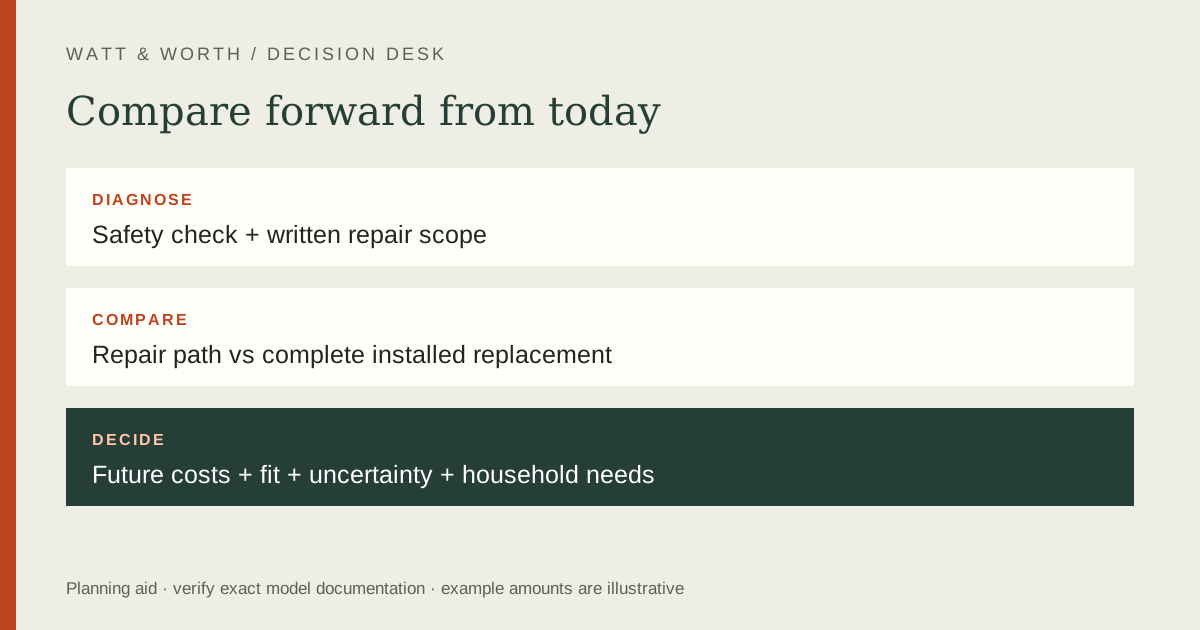
Decide whether to repair or replace after obtaining a diagnosis and comparing future costs from today. An appliance's age and a rough percentage rule are not enough. A modest repair to a suitable machine may be sensible; replacement may be preferable when the appliance no longer meets the household's needs or when a qualified assessment identifies an unsuitable or unsafe condition.
Start with safety and diagnosis
If there is a suspected safety issue, follow the manufacturer or recall instructions and seek qualified help. Do not continue operating equipment simply to test a buying calculation. Gas, electrical, refrigerant and structural work require appropriate expertise, and this worksheet is not a troubleshooting procedure.
Find the exact model and serial identity and check relevant CPSC notices. A recall remedy can change the next step. Match the affected identifiers and follow the official notice rather than assuming that every unit with the same brand name is included.
Ask a repair provider for a diagnosis, not just a replacement-part guess. Clarify the visit charge, proposed work, parts availability, labor, follow-up and any repair warranty. Ask what happens if the proposed repair does not resolve the reported problem. Keep the estimate in writing.
Compare complete paths forward
| Path | Include | Leave uncertain unless documented |
|---|---|---|
| Repair | Diagnosis, parts, labor and required follow-up | Future unrelated failures |
| Replace | New unit, tax, delivery, installation and removal | Future resale and durability |
| Temporary arrangement | Rental or other actual short-term costs | Assumed convenience value |
| Warranty or recall route | Covered work and any excluded costs | Eligibility until verified |
Do not count the old purchase price as money you can recover by choosing one path now. Focus on costs and consequences that change from this point. If a trade-in or disposal payment is real and documented, include it separately.
Check whether replacement requires site work that repair would avoid. A new connection, altered cabinetry or different vent route can outweigh a sale price. Conversely, repairing an appliance that no longer fits the household's tasks may preserve a problem rather than solve it.
Work an illustrative comparison
Assume a diagnosed repair costs $280, including the visit and labor. Assume a suitable replacement costs $1,100 fully installed and would save $35 annually in operating cost under your scenario. Over five years, replacement's operating savings total $175. Its extra initial cost over repair is $820, leaving $645 before considering other differences.
This does not prove repair is best. It shows that energy savings alone do not close the gap in that scenario. The condition of the existing machine, repair scope, needed features, service availability and tolerance for interruption remain relevant. None of the figures are market averages or a forecast of remaining life.
If you want to explore a second repair later, show it as a separate scenario with a clearly assumed amount. Do not label an invented repair allowance as an expected failure cost. Without evidence about probability and timing, a precise expected-value claim would be misleading.
Ask what the repair actually changes
A repair warranty may cover the work or part being supplied rather than the entire appliance. Read the terms. Ask whether the repair restores normal function, whether other observed issues remain and whether parts are readily available if follow-up is needed.
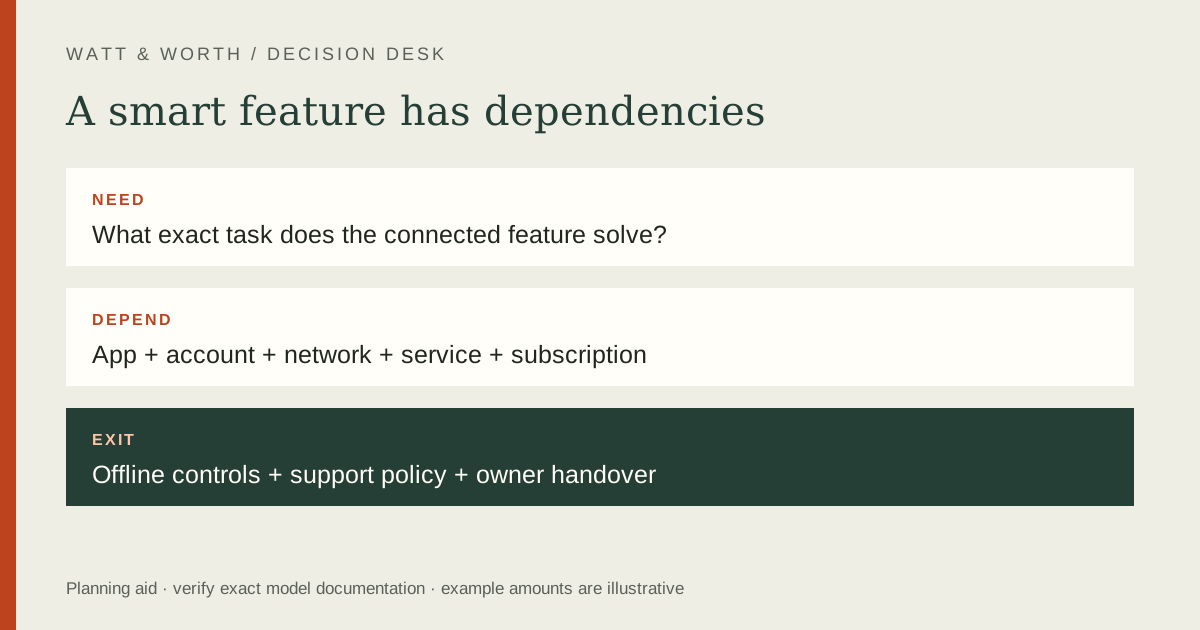
For connected appliances, distinguish mechanical operation from software support. Replacing a component may not extend the manufacturer's update policy or restore a discontinued service. Verify the feature you rely on before paying for a repair aimed at a different problem.
For used equipment, check whether the manufacturer warranty transfers and whether the seller offers any separate protection. Do not assume the original warranty duration applies to your purchase. FTC warranty guidance helps identify questions, but state rights and the written terms can differ.
Make the decision around your constraints
Consider interruption, accessibility and installation risk alongside the worksheet. A household that cannot be without a refrigerator may need a different plan from one replacing a secondary appliance. Record any temporary arrangement and its actual cost rather than inventing a universal value for inconvenience.
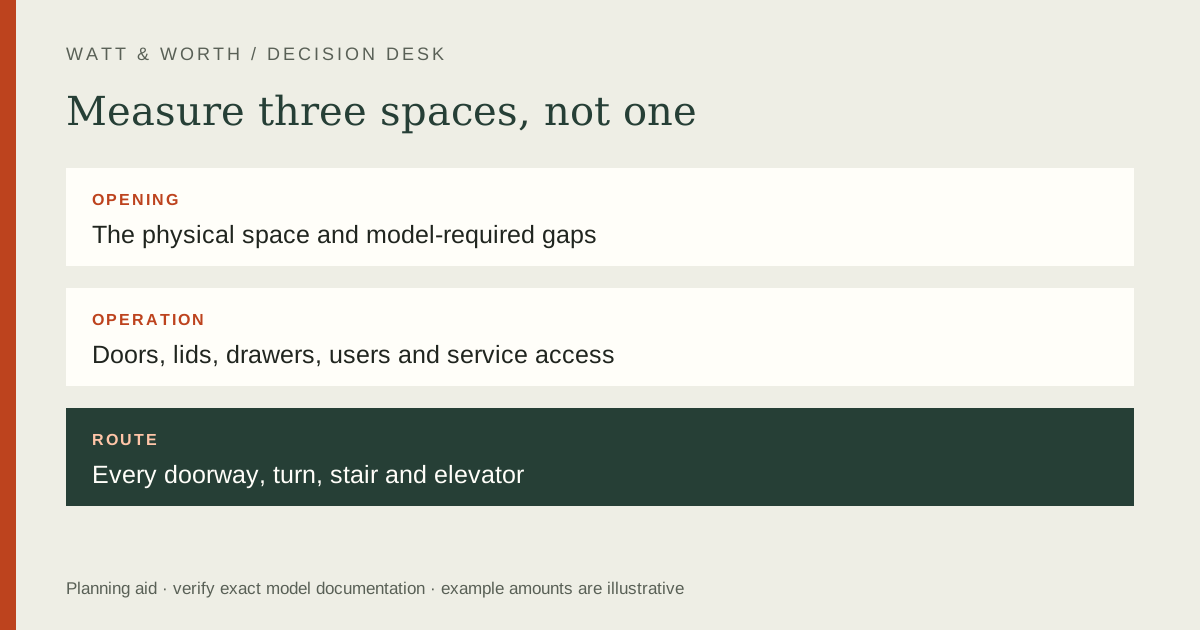
If repair is chosen, keep the diagnosis and receipt and ask which symptoms warrant follow-up. If replacement is chosen, measure the opening and delivery route again. Do not let a repair-versus-replace conclusion skip the normal purchase checks.
Use the ownership calculator for transparent scenarios, entering repair as one initial-cost path only if you understand its limits. The tool does not estimate remaining appliance life or future failure probability. Your explanation should say why the chosen path meets the household's needs, not just display a number.
A final practical check
Ask whether the diagnostic visit charge is credited toward the repair, and record the answer without assuming it applies to every provider. If you seek a second opinion, explain what has already been assessed so the scope is clear. Compare the same reported fault and proposed remedy rather than two differently defined jobs. Keep the repair decision separate from a sales offer made during the visit; a replacement recommendation should still pass the normal fit and installed-cost checks.
Frequently asked questions
Is there a universal repair-cost percentage cutoff?
No cutoff can account for installation work, actual diagnosis, remaining suitability and household constraints. A rule of thumb can start a question, but it should not replace the complete comparison.
Should energy savings justify replacement on their own?
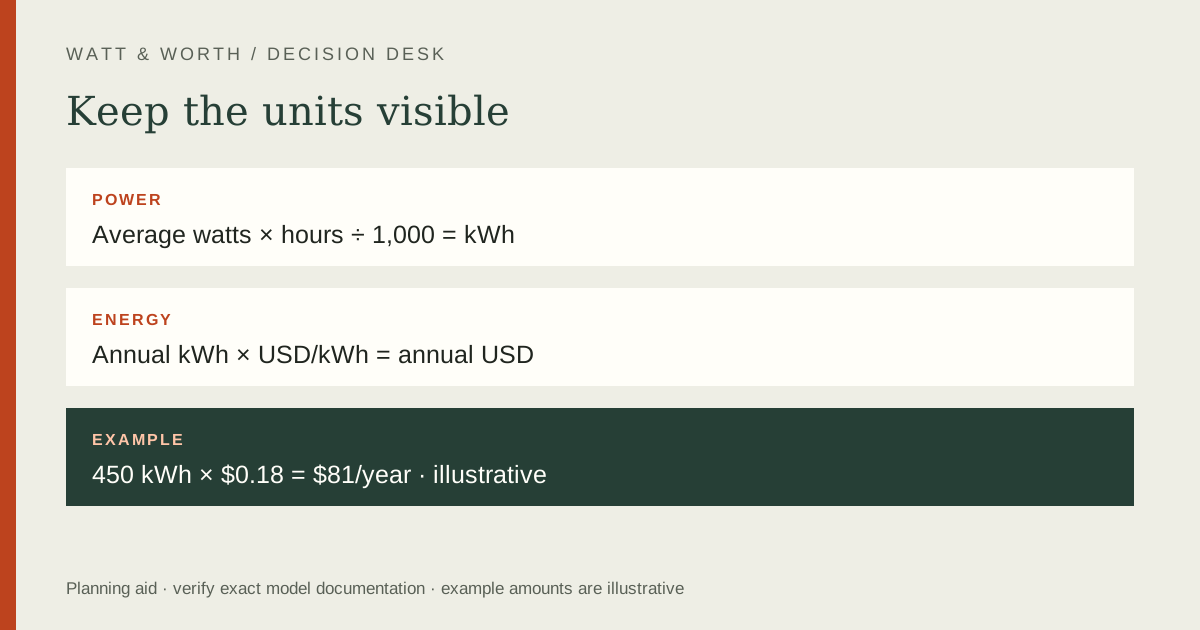
Calculate them with documented energy data and your rate. They may be material or small. Keep the assumed period explicit and do not treat payback as a durability guarantee.
What comes after this decision?
Use the purchase plan if replacing, review ownership cost and check measurements before ordering a different model.
Sources
- CPSC recalls — verify product identity and official remedies.
- FTC warranties — warranty terms, records and service questions.
- FTC software-update guidance — connected-product support questions.